Our Services
IBC Recycling & Reclamation
When IBC totes reach the end of their reusable life, we ensure every component is recovered, processed, and channeled back into manufacturing. Our zero-waste approach keeps thousands of tons of material out of landfills each year.
The Challenge
Why IBC Recycling Matters
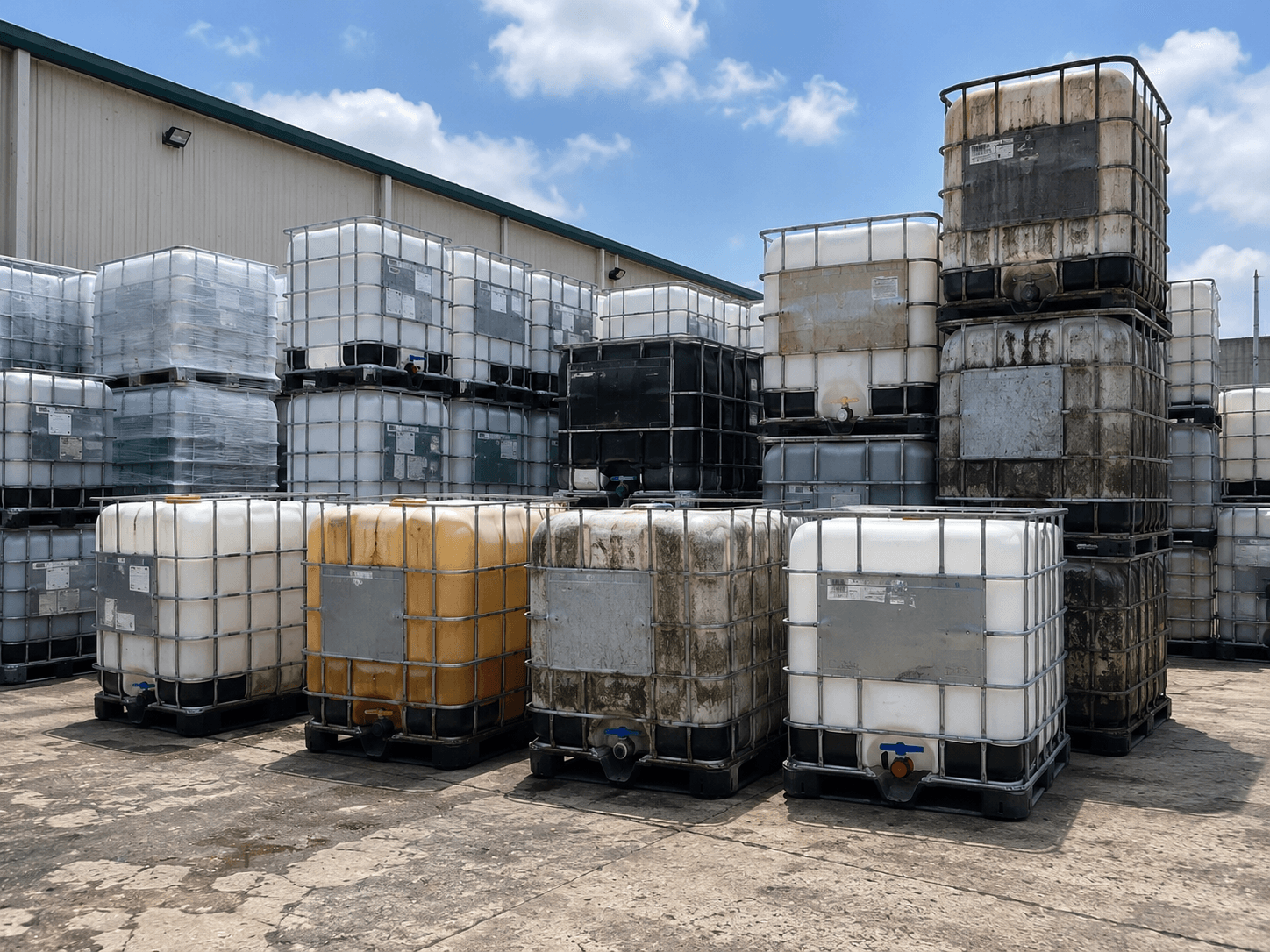
An intermediate bulk container is a complex, multi-material assembly. A typical IBC tote consists of a high-density polyethylene (HDPE) bottle weighing approximately 55 pounds, a galvanized steel cage frame weighing 75-90 pounds, and a wooden or composite pallet base. When these containers are discarded as mixed waste, they consume enormous landfill volume and waste valuable resources that could be reclaimed.
In the United States alone, millions of IBC totes are manufactured every year. Many are used only once before being discarded. At Grand Rapids IBC, we intercept end-of-life containers, disassemble them into their component materials, and process each material stream for maximum recovery.
The environmental benefits are significant: recycling a single IBC tote prevents roughly 55 pounds of HDPE plastic and 80 pounds of steel from reaching the waste stream. Multiply that across the thousands of containers we process annually, and the impact is substantial.
Industry data estimates that fewer than 30% of used IBC totes in the United States are properly recycled. The remainder end up in landfills, where the HDPE bottle alone can take over 400 years to decompose. The steel cage, while eventually degradable, leaches zinc and other metals into groundwater during decomposition. Our mission is to close this gap by making IBC recycling accessible, affordable, and convenient for every business that uses these containers.
55 lbs
HDPE plastic per tote
recovered
80 lbs
Steel per tote
recycled
98%
Material recovery rate
achieved
3,200+
Tons diverted annually
from landfill
400+
Years for HDPE to decompose
in landfill
70%
Of US IBCs go unrecycled
industry estimate
Step by Step
Our Complete Recycling Process
Every IBC that enters our facility follows a systematic disassembly and processing workflow. Each step is designed to maximize material recovery while minimizing energy use and waste generation. Our 12-step process ensures nothing is overlooked.
Scheduling & Intake Coordination
Before containers arrive, we coordinate with the seller or recycling program participant to determine quantity, previous contents, and any special handling requirements. This allows us to pre-assign processing lanes and have the right equipment and personnel ready. For hazardous material containers, we prepare containment systems and PPE in advance.
Receiving & Logging
Incoming containers are unloaded, counted, and logged into our tracking system. Each tote receives a unique batch number that follows it through every subsequent step. We record the source, date received, estimated condition, and any client-specific documentation requirements.
Photographic Documentation
Every container is photographed from multiple angles to create a visual record of its incoming condition. This documentation supports our recycling certificates, helps resolve any disputes about container counts or conditions, and provides data for our sustainability reporting system.
Hazard Assessment & Content Identification
Our team reviews labels, SDS sheets, and any documentation provided by the seller to identify previous contents. Containers with unknown contents are tested using pH strips, chemical detection kits, and visual analysis. This step determines the appropriate handling protocol for residual content removal.
Residual Content Removal & Neutralization
Any remaining product inside the bottle is carefully drained and collected. Depending on the substance, residual contents are either recycled (e.g., usable chemicals returned to the seller), neutralized using appropriate reagents, or disposed of through licensed hazardous waste handlers according to EPA and Michigan DEQ regulations.
Disassembly & Component Separation
The IBC is broken down into its three primary components: the HDPE bottle is removed from the steel cage frame, and the pallet base is separated. Valves, caps, gaskets, fittings, and labels are collected into separate bins. This manual separation ensures high-purity material streams and prevents cross-contamination between plastic, metal, and wood.
HDPE Bottle Washing & Shredding
The polyethylene bottle is washed to remove residual contamination, then fed into an industrial shredder that reduces it to uniform HDPE flake approximately 12mm in size. The flake is washed again in a hot-water flotation tank that separates any remaining non-HDPE contaminants, then dried in a centrifugal dryer and air-conveyed to storage silos.
HDPE Quality Testing
Samples from each shredded batch are tested for contamination levels, melt flow index, and color consistency. We use near-infrared spectroscopy to verify polymer purity and ensure our flake meets the specifications required by downstream manufacturers. Batches that do not meet grade are reprocessed or blended to achieve specification.
Steel Cage Processing
Galvanized steel cage frames are inspected individually. Frames in good condition with straight rails and intact welds are cleaned, painted if necessary, and set aside for reuse in new or reconditioned IBC assemblies. Damaged or worn frames are cut using hydraulic shears, compressed into bales weighing approximately 1,000 pounds each, and palletized for shipment to steel recycling facilities.
Pallet Sorting & Processing
Wooden pallets are sorted into three categories: reusable (minor repairs needed), recyclable (damaged beyond repair but usable as raw material), and compostable (severely degraded). Reusable pallets are repaired with replacement boards and sent back into service. Recyclable wood is chipped for mulch, animal bedding, or biomass fuel. Composite and plastic pallets are granulated and processed through their respective recycling streams.
Small Components Recovery
Valves, caps, gaskets, and fittings are sorted by material type. Brass and steel fittings are sent to metal recyclers. Rubber gaskets are collected for rubber recycling. Plastic caps and fittings made from polypropylene or HDPE are added to the appropriate plastic recycling stream. Even the labels are collected and recycled as paper waste. This attention to small components is what drives our 98% recovery rate.
Documentation, Certification & Reporting
Every recycling batch is documented with weights, material types, contamination levels, and downstream destinations. We provide certificates of recycling to business clients who need to demonstrate environmental compliance or report sustainability metrics. Full chain-of-custody tracking is available, showing exactly where each material stream was sent and how it will be reused.
Recovery Performance
Material Recovery Rates
We track recovery rates for every material stream to ensure we are meeting our near-zero waste commitment. Below are our current recovery percentages, along with weight data per standard 275-gallon IBC tote.
| Material | Weight Per Tote | Recovery Rate | Reuse Rate | Recycled Into | Landfill Rate |
|---|---|---|---|---|---|
| HDPE Bottle | ~55 lbs | 99.2% | 15% (if rebottled) | HDPE flake for new products | 0.8% |
| Steel Cage Frame | ~80 lbs | 99.8% | 40% (if in good condition) | Baled steel for smelting | 0.2% |
| Wood Pallet | ~35 lbs | 96.5% | 55% (after repair) | Mulch, bedding, biomass fuel | 3.5% |
| Composite Pallet | ~28 lbs | 98.0% | 70% (higher durability) | Plastic lumber, granulate | 2.0% |
| Valves & Fittings | ~3 lbs | 97.0% | 25% (if like-new) | Metal and rubber recycling | 3.0% |
| Gaskets & Seals | ~0.5 lbs | 90.0% | 0% (always replaced) | Rubber recycling stream | 10.0% |
| Labels & Adhesives | ~0.2 lbs | 85.0% | 0% | Paper recycling | 15.0% |
| Overall IBC Assembly | ~170 lbs total | 98.3% | Varies by component | Multiple streams | 1.7% |
Material Destinations
What Happens to Each Material
Transparency is central to our recycling program. We track every material from our facility to its final destination, so our clients know exactly where their containers end up and how the materials are reused.
HDPE Plastic
~55 lbs per tote
After shredding, washing, and quality testing, clean HDPE flake is sold to downstream plastics manufacturers. The flake is melted and extruded or injection-molded into new products. HDPE is one of the most recyclable plastics, maintaining its structural properties through multiple recycling cycles.
End-Use Destinations
- New plastic containers and bottles
- Drainage and sewer piping
- Composite lumber and decking
- Automotive fuel tanks and components
- Playground equipment and park benches
- Agricultural irrigation fittings
Galvanized Steel
~80 lbs per tote
Steel cage frames are either refurbished for reuse or baled and shipped to steel mills. The galvanized coating is removed during the smelting process, and the recovered zinc is also recycled. Steel is infinitely recyclable without degradation of its properties, making it one of the most efficient materials to recover.
End-Use Destinations
- New IBC cage frames (if in good condition)
- Structural steel beams and columns
- Automotive body panels and frames
- Appliance housings and components
- Construction rebar and reinforcement
- Steel cans and containers
Wood & Composite Pallets
~35 lbs per tote
Wooden pallets undergo a three-tier sorting process. The best pallets are repaired and returned to service, extending their lifespan by years. Damaged wood is chipped and processed into useful byproducts rather than being discarded. Composite pallets are granulated and re-molded into new pallets or plastic lumber.
End-Use Destinations
- Repaired and reused as shipping pallets
- Landscaping mulch and ground cover
- Animal bedding for livestock facilities
- Biomass fuel for energy generation
- Composite pallets re-granulated and re-molded
- Particleboard and engineered wood products
Measurable Impact
Environmental Impact Calculations
We quantify the environmental benefits of every recycling batch using industry-standard lifecycle assessment methodologies. These calculations compare the environmental cost of recycling versus landfill disposal and versus manufacturing new containers from virgin materials.
The numbers are compelling. Recycling 100 IBC totes saves the equivalent of 7 metric tons of CO2 emissions -- roughly equal to taking three cars off the road for an entire year. The water savings from using recycled HDPE instead of virgin resin production are equally dramatic, at approximately 15,000 gallons per 100 containers.
For businesses with corporate sustainability goals, ESG reporting requirements, or ISO 14001 environmental management certifications, these metrics provide concrete, documented evidence of environmental stewardship. We include all relevant data in our recycling certificates and can customize reporting formats to match your internal systems.
Impact per 100 IBCs Recycled
Recycling vs. Landfill Cost Comparison
Disposing of IBC totes in a landfill is not only environmentally harmful -- it is often more expensive than recycling. Here is a typical cost breakdown for a business disposing of 50 end-of-life IBCs.
Landfill Disposal
- Dumpster rental: $300-$500
- Hauling fees: $200-$400
- Tipping fees (by weight): $800-$1,200
- Labor to load dumpster: $200-$400
$1,500 - $2,500 total cost
Grand Rapids IBC Recycling
- We pick up (free within 150 miles for 10+ totes)
- We handle all processing and disposal
- We may pay YOU for containers in good condition
- Recycling certificates included at no charge
$0 - positive revenue
Industry Context
IBC Recycling Industry Statistics
Understanding the broader context helps businesses appreciate why IBC recycling is not just good practice -- it is increasingly becoming a regulatory and competitive necessity.
4.5 Million
IBCs manufactured annually in the U.S.
This number has grown 8-10% year-over-year as manufacturers shift from drums and tanks to the more efficient IBC format.
30%
Estimated U.S. IBC recycling rate
The majority of used IBCs still end up in landfills. Lack of awareness and inconvenient recycling options are the primary barriers.
$250M+
Value of recoverable materials
The raw materials in discarded IBCs (HDPE, steel, wood) represent over $250 million in annually wasted value nationwide.
2030
Expected regulatory tightening
Multiple states are considering legislation that would require documented recycling programs for commercial IBC users.
Our Network
Downstream Recycling Partners
We do not simply shred and ship. Grand Rapids IBC maintains long-standing relationships with vetted downstream processors who meet our standards for environmental responsibility, regulatory compliance, and material quality.
Our HDPE flake is supplied to three Midwest-based plastics manufacturers who convert it into drainage pipe, composite lumber, and new containers. Our steel is sent to two regional steel mills that produce structural steel and automotive components. Wood chips and mulch are distributed to local landscaping companies and municipal composting facilities.
We audit our downstream partners annually to verify their environmental practices, permits, and handling procedures. This ensures that the materials we process are genuinely recycled rather than downcycled or, worse, re-landfilled by a less scrupulous handler downstream. Full chain-of-custody documentation is available to clients who require it for their sustainability reporting.
Compliance & Documentation
Businesses that recycle through Grand Rapids IBC receive comprehensive documentation to support their regulatory compliance and sustainability reporting needs.
Certificate of Recycling
Issued for every batch processed, documenting material types, weights, processing dates, and downstream destinations. Accepted by EPA, state DEQ offices, and third-party auditors.
Chain-of-Custody Report
Detailed tracking of each material stream from our facility to the final downstream processor. Includes transporter information, receiving facility permits, and processing confirmations.
Environmental Impact Summary
Quantified environmental benefits including CO2 avoided, water saved, energy saved, and landfill volume prevented. Formatted for ESG reporting, annual sustainability reports, and ISO 14001 documentation.
Waste Manifest / BOL
For containers that held hazardous materials, we provide complete waste manifests and bills of lading as required by RCRA regulations. These documents satisfy cradle-to-grave tracking requirements.
Annual Recycling Summary
For ongoing recycling program participants, we provide annual summaries aggregating all batches processed, total materials recovered, and cumulative environmental impact metrics.
For Businesses
Recycling Programs for Manufacturers & Distributors
If your operation generates a steady stream of used IBC totes, our structured recycling program takes the burden off your team. We design a recurring schedule around your production cycle, handle all pickups, and provide documentation for your sustainability reporting.
Our recycling programs serve manufacturers in food processing, chemical production, agriculture, pharmaceuticals, and general manufacturing. Each program is customized to the client's volume, frequency, container types, and reporting needs. There are no long-term contracts -- you can adjust frequency, pause, or cancel at any time with 30 days notice.
Environmental Impact per 100 IBCs Recycled
Program Benefits for Your Business
FAQ
Frequently Asked Questions
What happens to an IBC tote that cannot be reused?
End-of-life totes are fully disassembled and their materials separated for recovery. The HDPE plastic bottle is granulated and processed into recycled resin, the steel cage is recycled as scrap metal, and the pallet is reused or recycled by material type.
Which parts of an IBC tote are recyclable?
Nearly all of it. The HDPE inner bottle, the welded steel cage, and most pallet materials are recyclable. Our process achieves a material recovery rate of around 97.8%, sending virtually nothing to landfill.
Do you offer recycling programs for businesses?
Yes. We build zero-waste recycling programs for companies that generate used or damaged IBC totes, including scheduled pickup, volume-based pricing, and documentation you can use for ESG and sustainability reporting.
Can you recycle totes that held chemicals?
Most chemical totes can be recycled after appropriate residual handling. We cannot accept containers that held RCRA-listed hazardous waste, radioactive, or biohazardous materials, which require licensed hazardous-waste disposal. Share the prior contents and we will advise.
What environmental benefit does IBC recycling provide?
Recycling and reusing IBC totes keeps roughly 55 lbs of HDPE plastic per unit out of landfills and avoids the carbon emissions of manufacturing new containers, around 70 kg of CO2 each. Across our annual volume that totals thousands of tons of plastic diverted.
Have IBCs That Need Recycling?
Whether you have a handful of end-of-life containers or thousands, Grand Rapids IBC can process them responsibly. Contact us to discuss your recycling needs or to set up a recurring program for your facility.